

You are welcome to republish this story through the Creative Commons license CC BY-NC-SA 4.0. Where republishing conditions differ for images, this is noted in individual captions. (See this page for more information.)
By Fernanda Abra and Mayan Press Goldfreind
Fernanda is a biologist, researcher, and entrepreneur. Mayan is a veterinarian, with a focus on wildlife conservation.
For passionate conservationists, it is very common to find our way deeper and deeper into the subject, sometimes from a very early age. With that commitment comes an increasing awareness of what is at stake, making the scale of today’s environmental challenges truly overwhelming. The numbers are frightening, and it often feels as though society is not fully behind those trying to protect nature. That is why projects like Reconecta matter so profoundly: it shifts our attention from despair to action, from being submerged by problems to actively designing solutions and measuring real outcomes.
Reconecta is a project dedicated to understanding how roads affect arboreal biodiversity through wildlife–vehicle collisions and habitat fragmentation that genetically isolate populations and erode their long-term viability. By identifying roadkill “hotspots” and the canopy species most at risk, the initiative develops mitigation strategies grounded in scientific research and enriched by traditional knowledge from local communities.
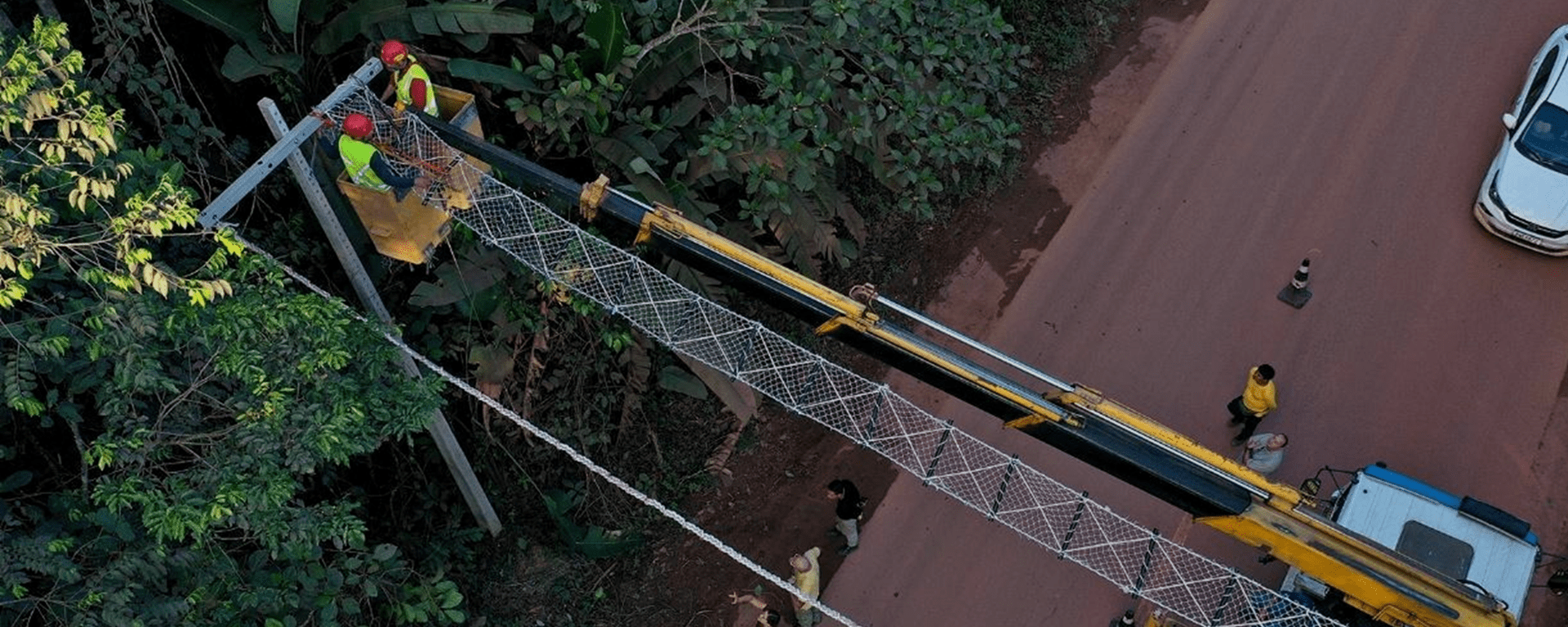
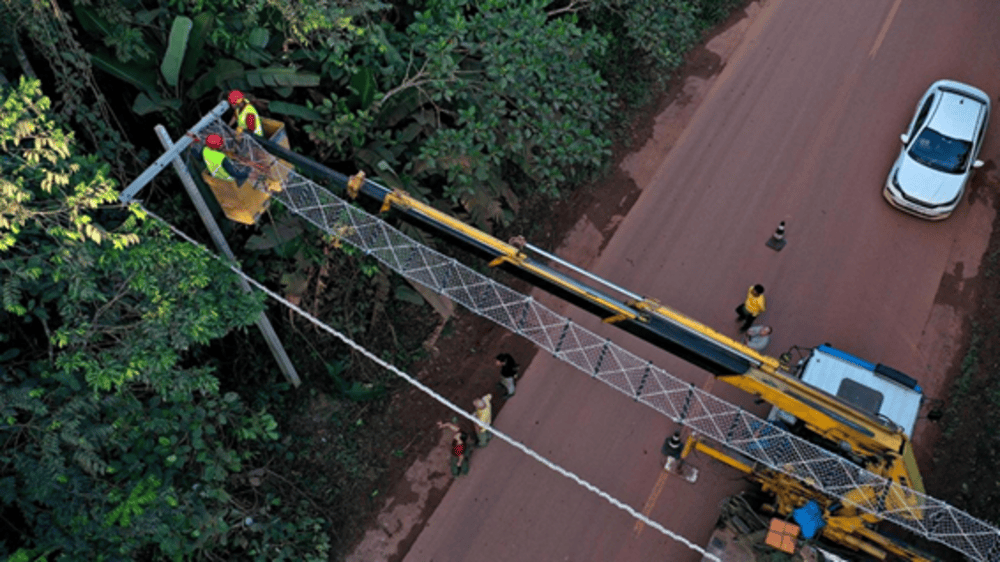
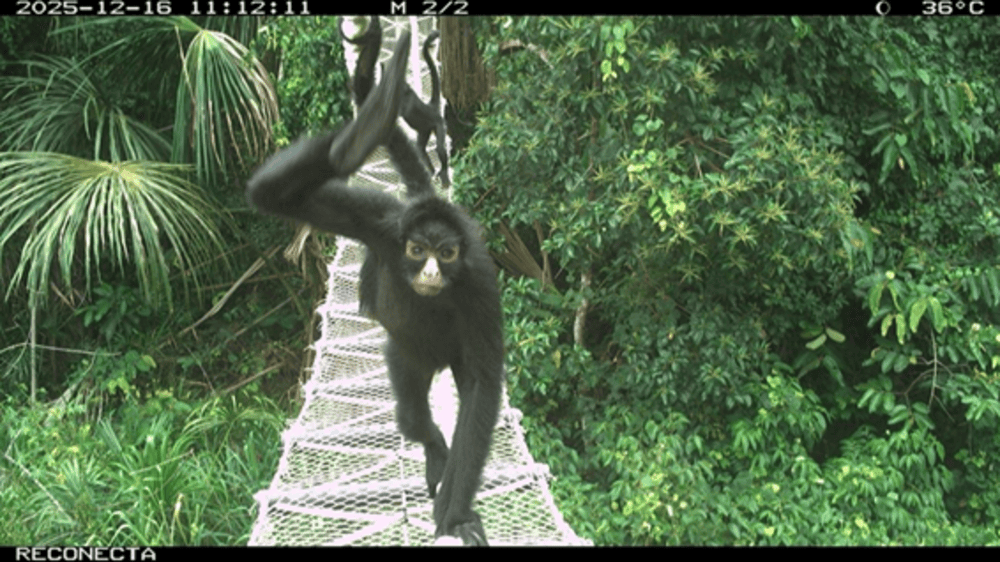
For instance, the Amazon rainforest is home to 109 different species of primates, representing about 16% of the group’s global diversity. However, approximately 40% of primate populations in Brazil are threatened with extinction; and the fragmentation of their territory, caused by the construction of roads, highways and deforestation, is considered the main factor responsible for this situation. With this issue in mind, the project focuses on arboreal primates, a group that rarely descends to the ground; for them, even narrow roads can create impassable canopy gaps, creating serious barriers to movement. To solve this, the Reconecta team builds and installs canopy bridges that provide a safe road crossing for these species, and, as its own name suggests, reconnects the fragments.
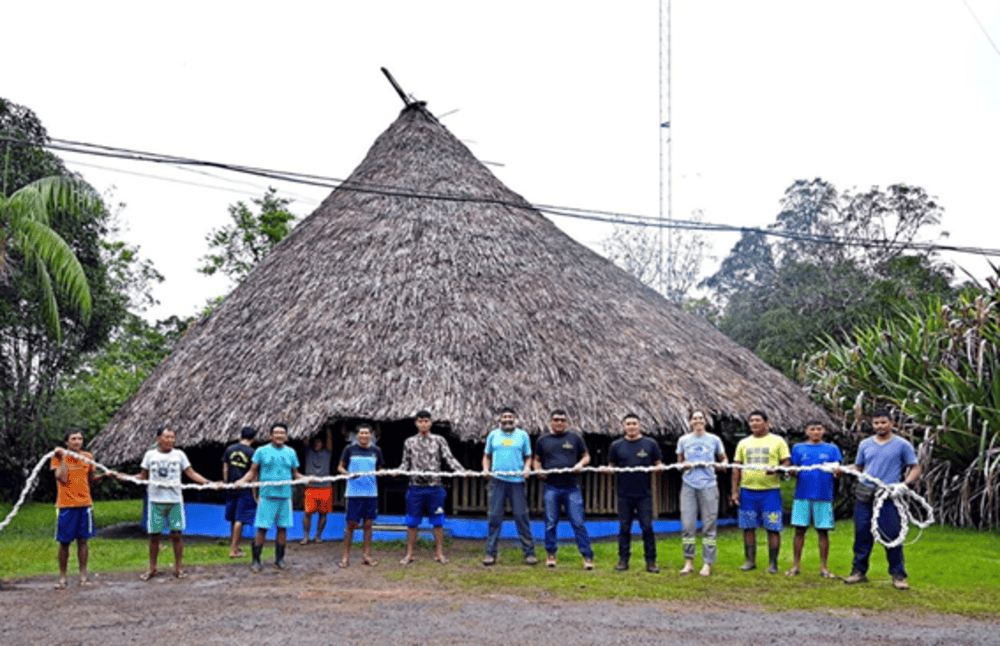
During its first phase, Reconecta worked closely with the Waimiri-Atroari Indigenous people—self-denominated as Kinja—a community profoundly scarred by military violence during the 1970s. They maintain an intimate relationship with the forest and its wildlife, and the loss of animals to roadkill is deeply felt: species such as spider monkeys (Ateles sp.) and the golden-handed tamarin (Saguinus midas) are woven into Kinja culture, diet, and mythology. According to their beliefs, S. midas represents a Kinja person living in a primate’s body.
Motivated by this worldview, the Kinja have been recording road-killed animals since 1997 along 125 kilometers of the BR-174 highway—likely one of the world’s largest Indigenous-led citizen-science initiatives. Their detailed records, combined with deep knowledge of local geography, ecology, and Amazonian history, proved fundamental to selecting sites and ensuring the success of Reconecta’s interventions in the region. Building directly on this collaboration, Reconecta has already installed and monitored 32 artificial canopy bridges and monitored 20 natural canopy connections along the BR-174, documenting 4382 successful crossings by 23 mammal species.
Building these bridges is technically demanding, especially in the Amazon, where extreme humidity, temperature shifts, strong winds, and severe weather require engineering solutions tailored to each landscape and ecological context. To evaluate performance and guide improvements, each bridge is monitored by two camera systems: one records animal use and behavior on the structure itself, allowing engineers to refine designs, while the other surveys the surrounding forest to detect species that approach but do not cross, providing key information for the development of broader and more inclusive solutions.
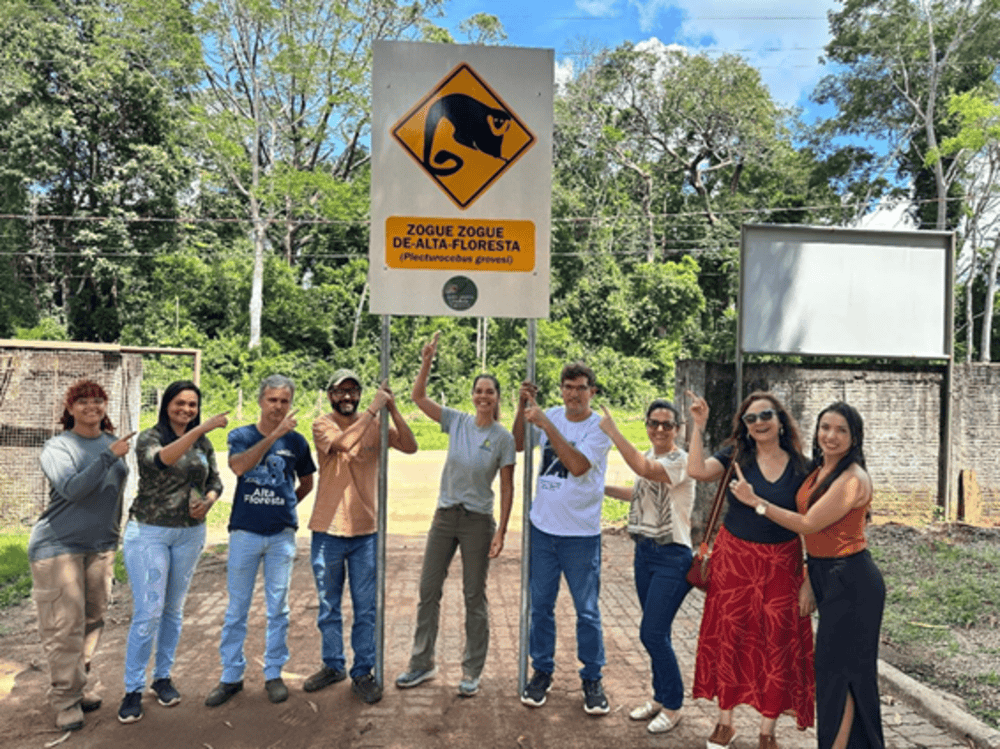
Encouraged by the results, the project later expanded to Alta Floresta, a city located within the so-called “arc of deforestation” in the Amazon. This area contains at least 12 arboreal primate species, six of which regularly appear in urban locales. Working alongside public institutions, Reconecta launched the program Alta Floresta Não Atropela (Alta Floresta doesn’t run over). Remarkably, within just ten months of monitoring at this site, they recorded more than 1550 successful canopy crossings by seven mammal species, including the highly fragmentation-sensitive black-faced spider monkey (Ateles chamek).
Looking ahead, Reconecta is crossing national borders. Funded by the Future For Nature Foundation, the project is expanding into Suriname in partnership with an NGO named Conservation and Wildlife Crime of Wildlife & People Suriname, where it is establishing the country’s first systematic monitoring of wildlife road mortality. Early data already stand out: reptiles are the most affected group, and collision rates exceed monthly averages recorded in Brazil, possibly reflecting the region’s exceptionally high wildlife densities.
At the same time, Reconecta continues to grow within Brazil, with new canopy bridges planned for Alta Floresta, Lucas do Rio Verde in Mato Grosso state, and along the BR-262 near Corumbá, Mato Grosso do Sul state. Together, these efforts are helping to build one of the first long-term diagnoses of road impacts on Amazonian wildlife, transforming data into practical solutions that protect animals while reshaping how infrastructure and conservation can coexist.

