

You are welcome to republish this interview through the Creative Commons license CC BY-NC-SA 4.0. Where republishing conditions differ for images, this is noted in individual captions. (See this page for more information.)
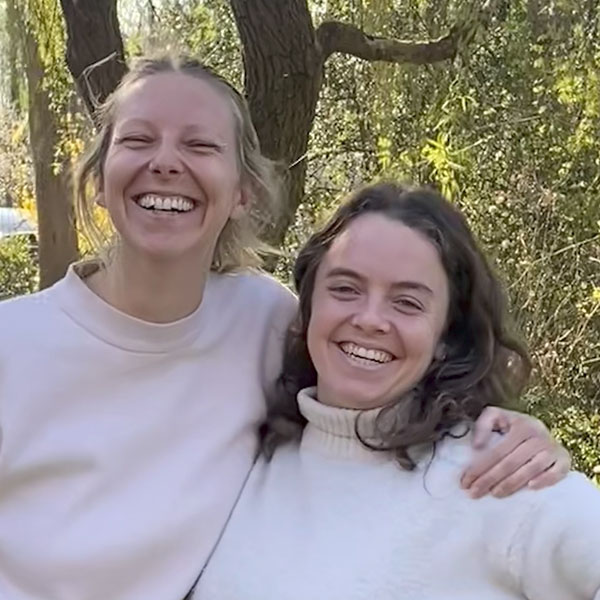
An interview with May Scott and Yasmine Grignard
May (right) is the Deputy Director of Communications and Yasmine (left) is the Communications Advisor at the Global Rewilding Alliance.
Q: What does a truly successful rewilding project look like to you—not just ecologically, but socially or emotionally?
A: Rewilding is a journey towards a more biodiverse, wild future where dynamic ecosystems are resilient, self-sustaining and abundant, allowing people and wildlife to thrive together.
At the heart of rewilding successes are people and hope.
Millions of people around the world are responding to a deep, positive, visceral drive—to support nature’s recovery. They are coming together across each of our world’s continents under the shared vision to be nature’s guardians and good ancestors to our next generation. Success is rooted in these people—their love for nature, connection to our land, seas and wild kin, and their dedication to its recovery. And hope is a direct consequence—it is a practical hope based on real, positive actions happening right now, in all corners of the world.
In Mexico, Australia, India, the revival of traditional ways is empowering communities to reignite the reciprocity which once guided their relationship with the land. In Cambodia, Argentina, Mozambique, wild populations of rare species are stabilising after years of local communities building stewardship of the ecosystems they depend on. In Sweden, the USA, Estonia, the removal of dams from our rivers has breathed life back into our waters, with effects that trickle down to us all by strengthening resilience in a changing climate. Through each of these—and many more—the bedrock of rewilding successes is bound together with one word: Hope.
Rewilding is a stubbornly optimistic nature-based solution that brings people together, and gives the right conditions for nature to heal, often at a surprising rate and scale.
Q: In recent years, rewilding has come to include not just large-scale ecological restoration, but also education, community engagement, and even personal transformation. Many of the stories in this initiative reflect that broader interpretation.
How do you approach storytelling in a way that honours this diversity while still holding onto the core principles of what rewilding means?
A: Within the core principles of rewilding, from which the Global Rewilding Alliance was founded in 2021, the first implores us to “rewild our hearts and minds” and the second is to “make hopeful stories come to life”. So, storytelling about the wide-ranging diversity of our movement is synonymous with the core principles of rewilding!
We recognise the power of stories to connect people with nature, bring hope, and empower people to take action. But also to bring critical, often complex information to life. It is a major shift from the widespread approach of hammering people with “doom and gloom”; this induces anxiety in many people and therefore runs the risk of causing depression, withdrawal and hence inaction. Storytelling is not a latent word—it’s active, it’s visual, and it ignites our imagination into action. Action creates hope as much as the other way round, so by sharing stories of rewilding in action, we show people the way and generate that desire to get involved and make more action happen.
Our stories often tell personal journeys of transformation. For example:
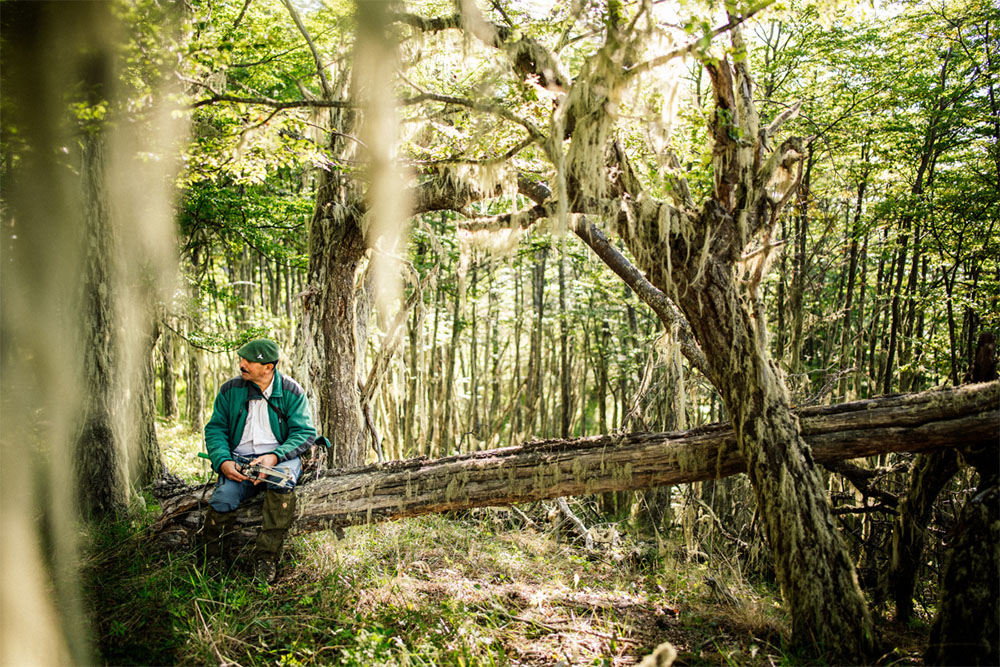
- A leonero from a generational line of puma hunters turns rewilder and now works with rural communities and Rewilding Chile to bring these magnificent animals back.
- A local fisher in India now encourages entire fleets of fisherfolk to support the return of whale sharks, working alongside the team from the Wildlife Trust of India.
- Local “tiger widows” in Bangladesh are helping to restore mangrove forests as they have come to understand that the tigers are venturing further afield because of the loss of their habitat.
These personal and human stories are vital to achieve our large-scale vision, and like the biodiverse, complex ecosystems that we seek to return, our strength lies in this diversity.
Rewilding Together: Stories from the Field is a living, evolving storytelling of the inspiring people, from all walks of life, as they support nature recovery.

Q: Another challenge in storytelling is deciding which voices and perspectives are included and those which aren’t.
How do you approach the process of selecting stories for this initiative in a way that reflects the movement’s diversity, while also avoiding the temptation to focus only on the most “media-friendly” narratives?
A: The rewilding movement has an abundance of positive stories to share, making the selection process for Stories from the Field plentiful and dynamic. The role of the Global Rewilding Alliance is to spotlight our worldwide partners, the different aspects of nature recovery and, as much as we can, go towards tricky concepts, misconceptions, or complex narratives. This is no small feat—one that we do only imperfectly, while we are proactively evolving these conversations one story at a time.
We are not fixated on being “media-friendly”. Our aim is to mainstream rewilding in science, policy, and practice; and while a big part of this is storytelling about the good parts, our priority is to support our growing network of 260+ organisations that are on the ground. Therefore, these stories are as much aimed at rewilders as at our global public.
Stories of species reintroduction are always a great hit, but it is just as necessary to talk about the various steps that get us to having ecosystems that support the full array of life. The stories welcome complexity, the more tangled parts of rewilding, sometimes paradoxes. It is a great joy to unpick these as they crop up in this work and to tap into our network’s expertise to answer tricky questions.
To reflect our diversity, these stories come from different parts of the world, as well as from people of all walks of life. This has been especially valuable in connecting with a wider audience, showing that they too can get involved, and understanding the key role of the messenger in connecting with their community.
Q: Each story highlights rewilding projects shaped by very different motivations, ranging from grassroots initiatives to those driven by investment or natural capital frameworks.
How can the movement accommodate a wide range of strategies while still maintaining unity and clarity?
A: The rewilding movement’s diversity is our own strength—mirroring the ecosystems that we work to bring back to health. Many rewilders have different standpoints or focuses from one another, but Stories from the Field reveals that we all share the same powerful vision, at least at the high level of wanting to work for nature’s recovery.
As an Alliance, we actively adopt a “big tent” approach that encompasses rewilding efforts all along the continuum of what it means to rewild. There are many steps towards reinstating dynamic, self-sustaining, whole ecosystems, all of which are necessary to create a wilder future. For example, we work with people who are laying the groundwork for the return of insects and others who are returning thousands of species, large and small, to huge swathes of land and sea. From small to big, our purpose is to connect and enable them.
Our movement is more vibrant, interesting, and creative—and therefore more likely to be successful—when we welcome and encourage a rich variety of approaches. We need to have constructive debates within our movement, rather than including some rewilding approaches and excluding others. This avoids yet more of the “circular firing squad” that we all too often see in progressive movements: “your rewilding is not as pure/effective/intellectual as mine.”
We need everyone involved to support nature’s recovery. We need financiers, lawyers, policy makers as well as ecologists and rewilders on the ground. As a movement, we are bound together by an ambitious vision—and collaboration will scale our impact to achieve it.
Q: Your initiative places strong emphasis on local leadership and lived experience. However, rewilding is sometimes misrepresented as an anti-human, anti-rural, and top-down agenda, fuelling fears of displacement, loss of livelihoods, and so forth.
Did these or similar concerns shape how you framed the storytelling approach for this project?
A: Rewilding is as much about people as it is about nature and wildlife. One of our main challenges is to debunk the unseen and ugly assumption that human progress necessarily means the decline of nature.
The narrative we’ve been used to is one that separates humans from nature. Rewilding, and progress towards a wilder future, requires a paradigm shift in our human relationship with nature, wildlife, and our land and seas—the recognition that we are, in fact, part of the fabric of nature. What is more, rewilding organisations have learned from more than 100 years of frequent failure in development-assistance programmes that have attempted to parachute in answers from outside. Instead, most are ensuring that local communities and indigenous peoples are central to the co-creation, management, and governance of rewilding efforts, ensuring that local priorities and knowledge are put in their rightful place—at the centre. Sometimes this means that “progress” is slower, but as the African proverb goes: “If you want to go fast, go alone; if you want to go far, go together.”
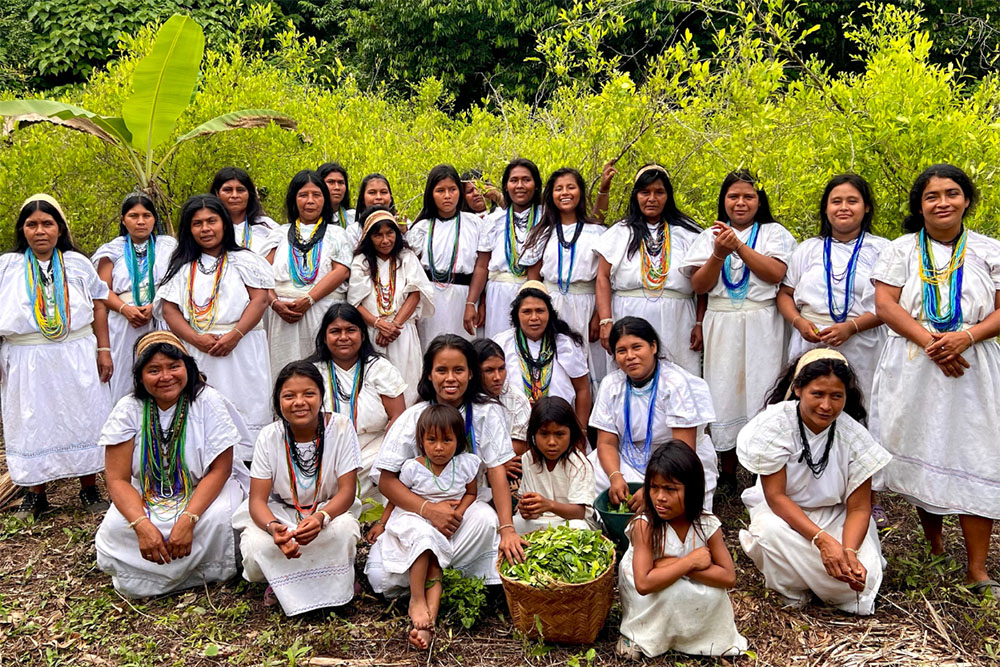
Our storytelling approach underlines that human progress does not necessarily mean the decline of nature: there is growing evidence that rewilding provides economic opportunities, jobs, protection from extreme weather, the revitalisation of community within rural areas and wellbeing in urban areas, as well as balanced ecosystems, and the list continues to grow. Many humans are becoming nature guardians and good ancestors, nurturing a healthy and thriving world for our grandchildren. This narrative needs to be restored and strengthened.
Q: How do you assess the impact of these stories? Are there specific signals—policy change, community feedback, media uptake—that you look for as evidence of positive transformation?
A: The most significant impact we are proud to have is showing evidence to our partners that they are far from alone in their ambitious mission. When you’re working on the ground in a remote part of the world, it can feel like a lonely venture. By shining a spotlight on rewilders and sharing success stories from all around the world, we bring even more passion, motivation, and hope to those working in local contexts. The positive impact from creating a global community is all-too-often overlooked and yet so central to scale our impact through knowledge-sharing, comradeship, joint advocacy, and even partnerships.
By sharing these stories far and wide, we also help our local partners reach a more global audience and thus reach wider support to scale their impact.
The constant flow of communication and stories is part of building momentum towards mainstreaming rewilding. Our team is proud to hear from people that they look out daily for our posts in their feed to bring an inspiring outlook and gain knowledge on the topic, as well as the growing uptake in people joining us to celebrate World Rewilding Day each year. It is so uplifting to grow this positive community!
In these ways, we are not overly focused on measuring the impact of particular actions or stories, but rather on the cumulative effect both within the rewilding community and in the wider world among decision-makers in all walks of life. This is about creating the conditions for systemic change; this rarely moves in a straight line but can appear tortuously slow for some time, until a take-off moment comes when exponential changes suddenly can happen.
Q: Are there regions, themes, or storytelling formats (video diaries, interactive maps, etc.) that you’re eager to explore next?
A: What an exciting question!
The Global Rewilding Alliance and our network of 260+ partners is rapidly growing as we connect with inspiring people and organisations around the world. With that comes many more incredible stories to share. As a general rule, we don’t like to pick out particular formats—we want to remain open to nice surprises as potential partners approach us!
Every 20th March, on World Rewilding Day, around the solar equinox, we celebrate the movement and inspire further action throughout the year. Together, we harness storytelling with different voices in their own language, told through poems, music, movies, and art, reaching hearts and minds across the world. Everyone is welcome, and we are keen to explore all means possible to engage people in our beautiful movement.
For example, we recently partnered with THE HERDS, a group of puppet wild animals travelling 20,000 km from the Congo Basin to the Arctic via Europe. This type of public art can be incredibly effective at engaging new people in rewilding and its message of practical hope.
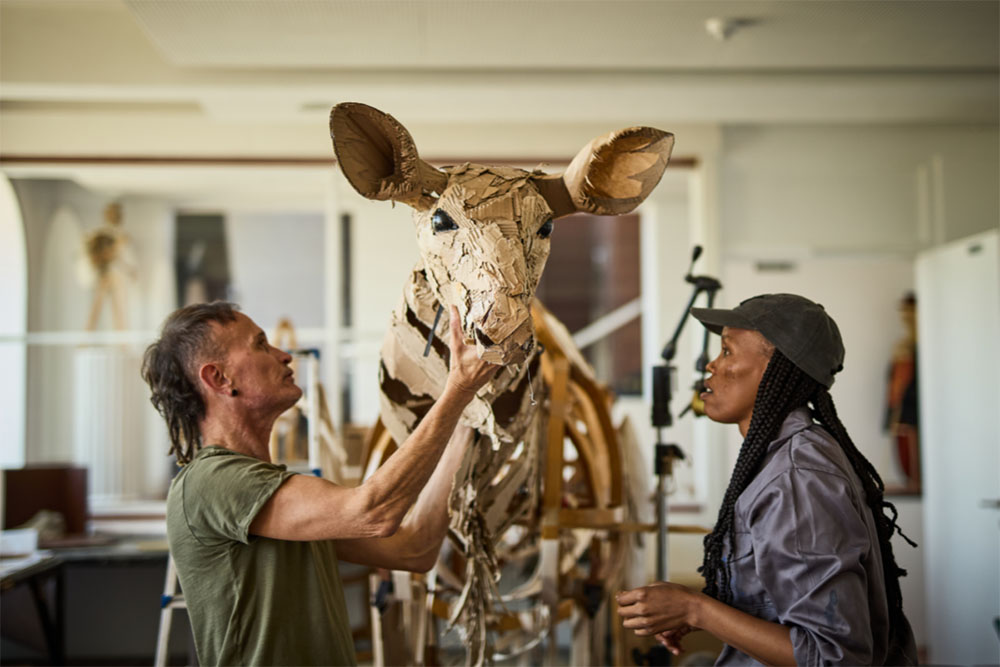
Going forwards, we aim to continuously act as a catalyst to the movement. To do so, we are exploring our “geographical gaps” to represent all of the regions of the world, bringing experts together around impactful science, policy, and practice, and telling their stories of challenges and successes.
We warmly invite you to join us in this journey towards a wilder world.
The questions were posed by Taylor Hood.
If you are involved in the advocating, funding, facilitating, or implementing of rewilding projects and are interested in being interviewed for this website, please get in touch with the Editors via the contact form.
[Header photo: James Shooter (Rewilding Britain)]
 Rewilding Successes