

You are welcome to republish this story through the Creative Commons license CC BY-NC-SA 4.0. Where republishing conditions differ for images, this is noted in individual captions. (See this page for more information.)
By Nikki Oliver
Nikki is the Project Support Officer for the Sussex Kelp Recovery Project.
In Sussex, along a stretch of England’s south coast, just a few hundred metres from the busy coastal city of Brighton, a story of hope is emerging. Historic kelp forests, lost for decades, are slowly beginning to flourish once more, demonstrating the ocean’s ability to recover when it’s protected from destructive fishing activity such as trawling.
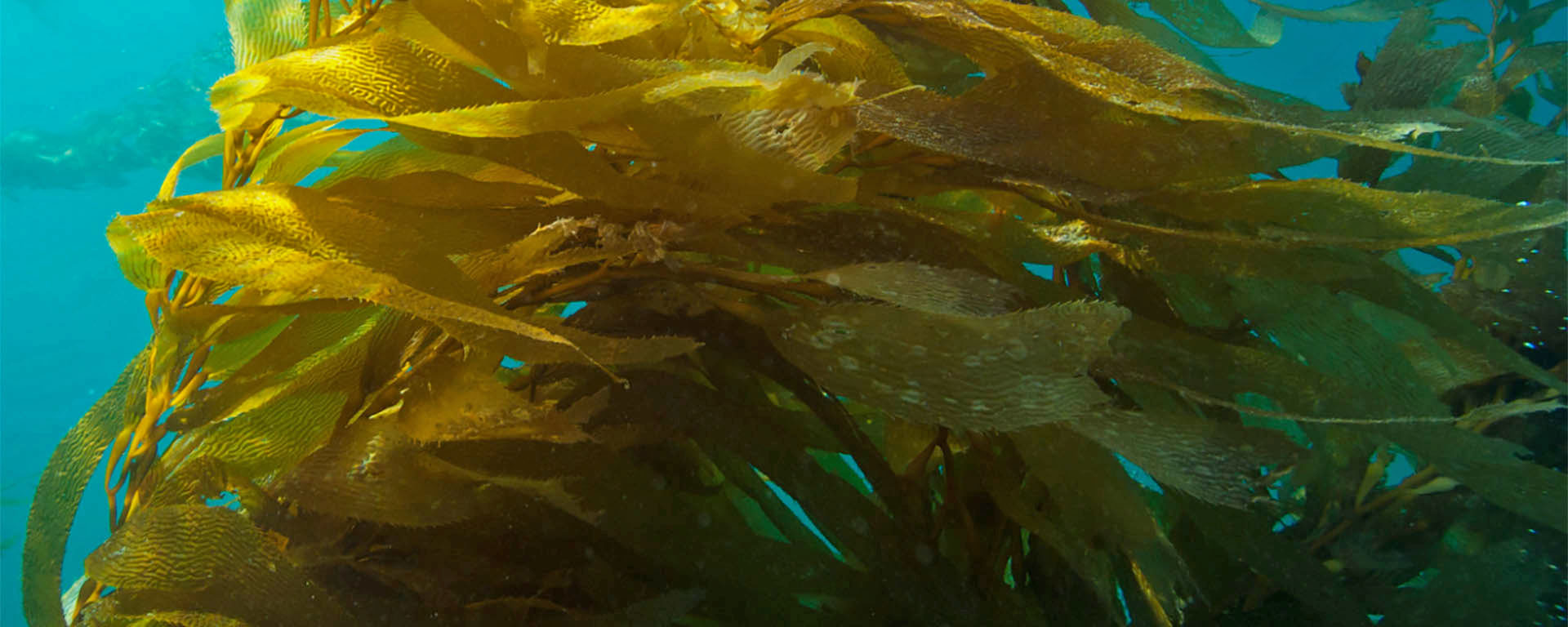
Kelp, flat-bladed large brown seaweeds, often grow in dense beds, creating some of the most biodiverse marine environments on the planet. These ‘marine trees’, anchored to the seabed, develop a ‘canopy’ under which many species take shelter and find food. As well as improving biodiversity, kelp provides a myriad of other ecological roles and benefits for the planet.
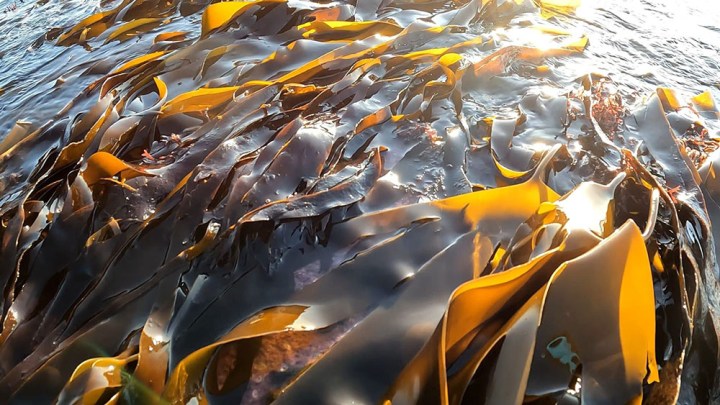
An extensive kelp forest once stretched along more than 40 km of the Sussex coastline and teemed with life, including species deemed commercially important such as European sea bass (Dicentrarchus labrax), black seabream (Spondyliosoma cantharus), European lobster (Homarus gammarus) and common cuttlefish (Sepia officinalis). But by 2019, 96% of kelp had disappeared, along with the marine life it supported.
Among the primary factors that caused the kelp to disappear were the ‘great storm’, which hit the UK in 1987, and the rise of destructive fishing activity in the area. At this time, pair trawling became prevalent. In this fishing practice, heavy trawl nets are towed between two vessels, which, when dragged along the seafloor, destroys seabed habitats.
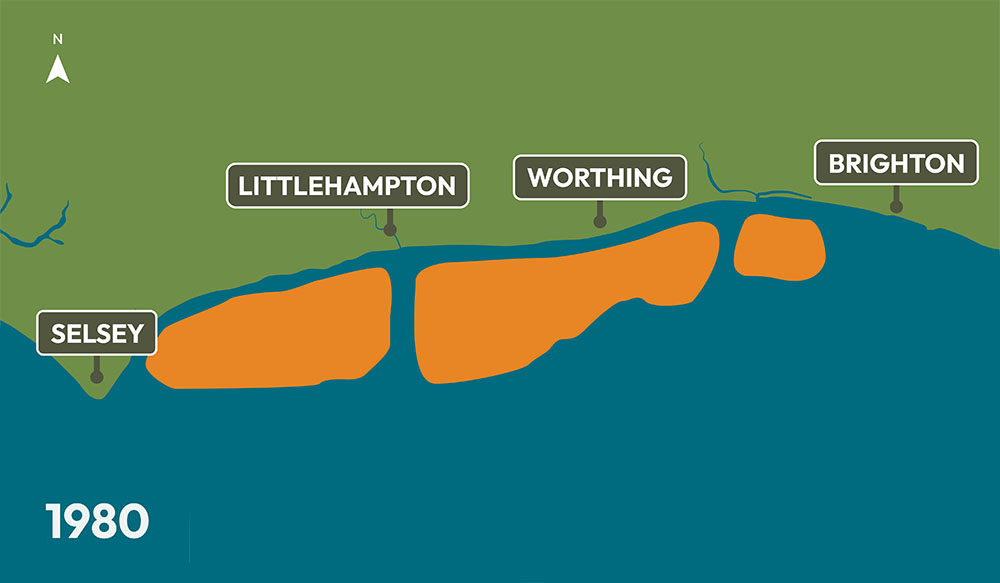
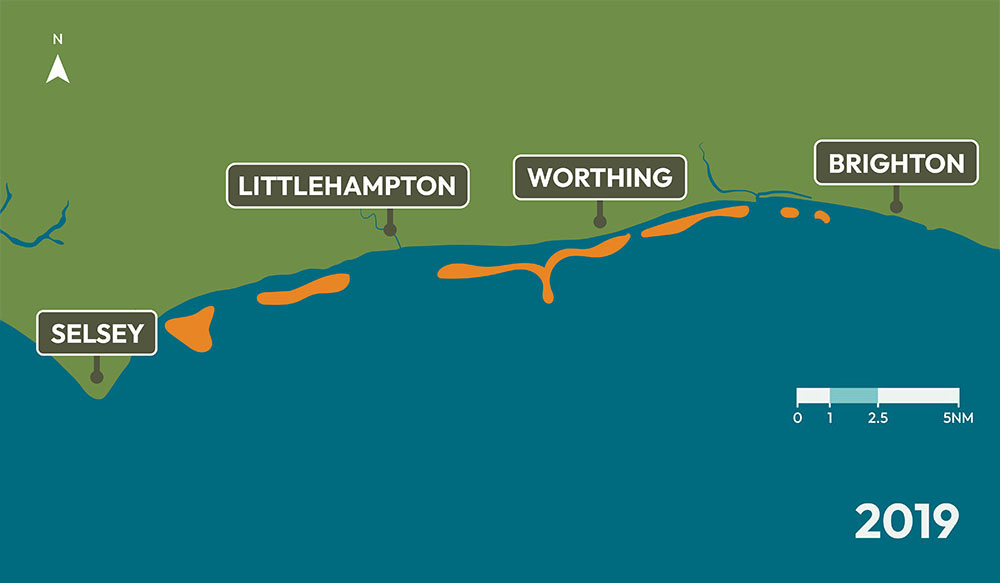
Comparison of kelp extent in 1980 and 2019 (images © Sussex Kelp Recovery Project)
Over the subsequent years, the local fisheries management organisation – the Sussex Inshore Fisheries and Conservation Authority – created a compelling case to initiate a new piece of legislation aimed at protecting fish habitats and supporting sustainable inshore fisheries. On 18 March 2021, the Sussex Nearshore Trawling Byelaw came into effect, prohibiting trawling from 300 km2 of the local coastline.
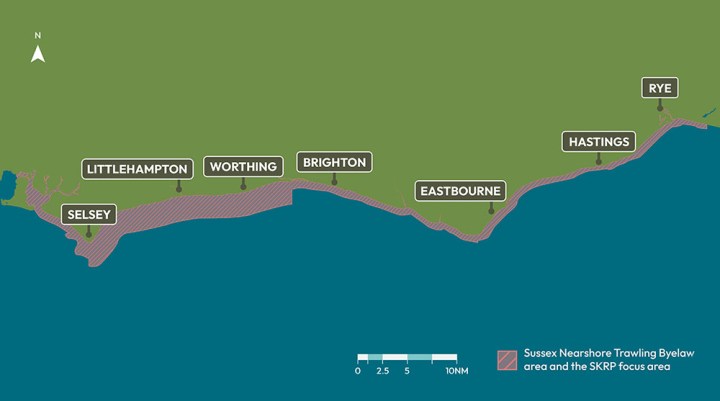
In turn, the byelaw aided the launch of the largest marine rewilding project in the UK, the Sussex Kelp Recovery Project (SKRP), a collaborative effort between scientists, government bodies, film-makers, community groups and conservationists. It is a collective effort to put kelp back on the map.
The SKRP follows the ethos of letting nature lead – giving natural processes and ecosystems time to recover and generate resilience, with minimal human intervention following the removal of serious trawling pressure. The SKRP is the first project of its kind to endeavour to understand the mechanisms of kelp recovery in the region.
Fundamental to the SKRP is its research programme, which aims to measure and quantify changes in the ecosystems, fisheries and local communities resulting from the introduction of the Sussex Nearshore Trawling Byelaw.
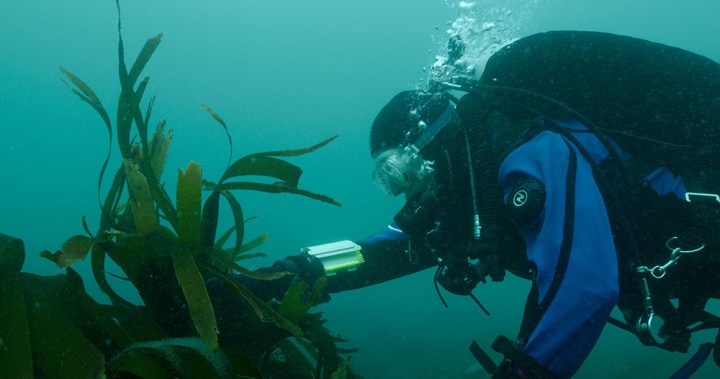
Using pioneering techniques including towed underwater cameras, baited remote underwater videos and environmental DNA analysis, alongside surveys of shellfish and landings data, the project has established a baseline for the health of marine habitats and species within the protected area.
The SKRP team are spurred on by the words of Sir David Attenborough, who celebrated the successful protection measures four years ago:
Sussex’s remarkable kelp forests will now have a chance to regenerate and provide a home for hundreds of species, creating an oasis of life off the coast, enhancing fisheries and sequestering carbon in our fight against climate change.
After years of damaging impacts on our local marine environment, the recovery of these complex ecosystems will take time, but we are now starting to see glimmers of hope for the type of recovery that Sir David Attenborough envisioned.
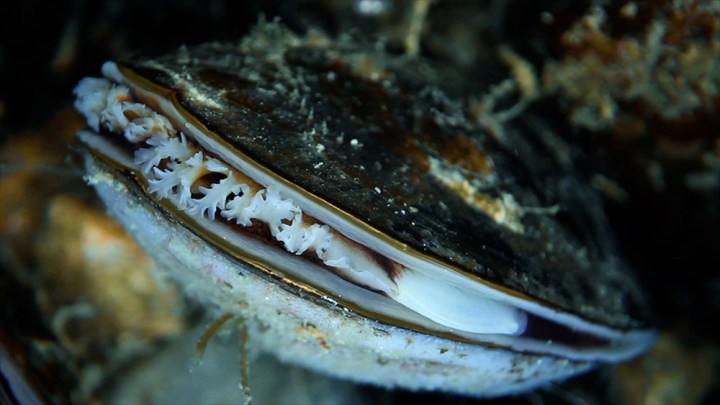
Blue mussel beds (Mytilus edulis), some the size of soccer pitches, have been reported by divers to be re-emerging along our coastline. These beds of shelled molluscs are essential for the recovery of our underwater forests: in the absence of a rocky seabed, mussels provide kelp with a hard surface to latch onto and grow. Our hope is that as these mussel beds grow, they will allow kelp to re-establish, helping the marine life associated with them to flourish.
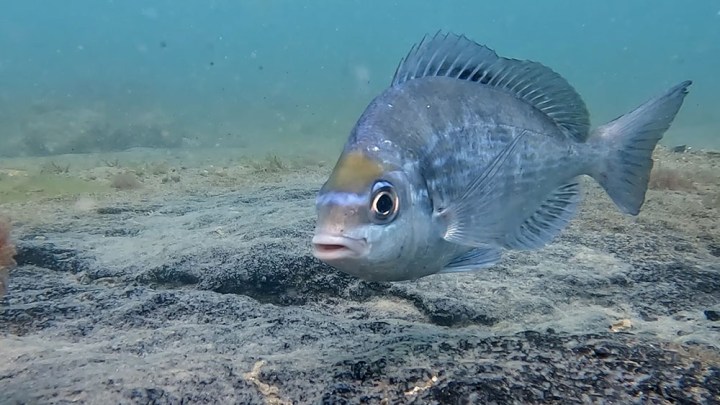
Following the protection of the seabed, increases in black seabream have also been observed by local fisherman and through our environmental DNA analysis. Black seabream were a species particularly targeted by trawling, and their nests on the seabed, called luna pads, are known to be vulnerable to this type of fishing.
Our vision is to ensure the recovery of kelp and other essential fish habitats at scale in Sussex to support a thriving and sustainable marine ecosystem that benefits nature, fisheries, coastal communities and the planet. In doing so, we hope to create a case study of marine rewilding and seabed protection that can be used by policy-makers worldwide.
 Rewilding Successes