

You are welcome to republish this story through the Creative Commons license CC BY-NC-SA 4.0. Where republishing conditions differ for images, this is noted in individual captions. (See this page for more information.)
By Lara Norberto Renzeti
Lara is a biologist working for Refauna.
At the heart of Rio de Janeiro, one of the most iconic cities in the world, lies a 3958-hectare expanse of imposing, green-covered hills. The Tijuca Forest has witnessed a history of devastation followed by a slow, though unsteady, process of restoration.
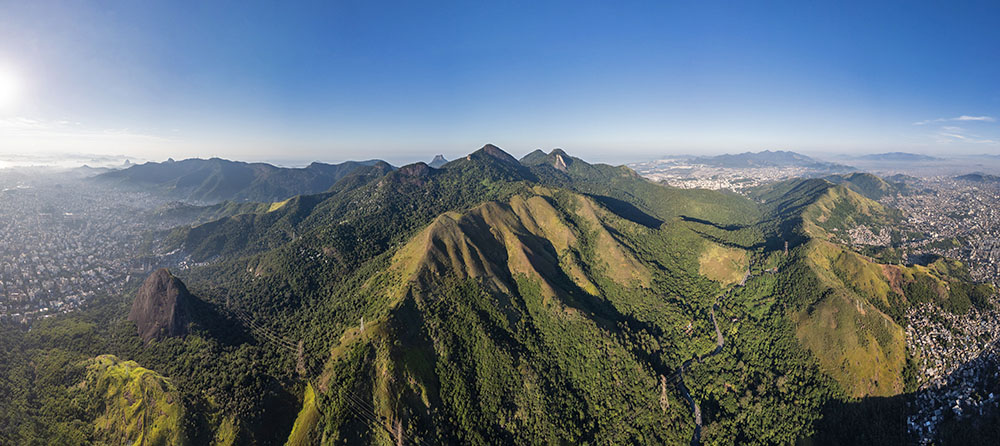
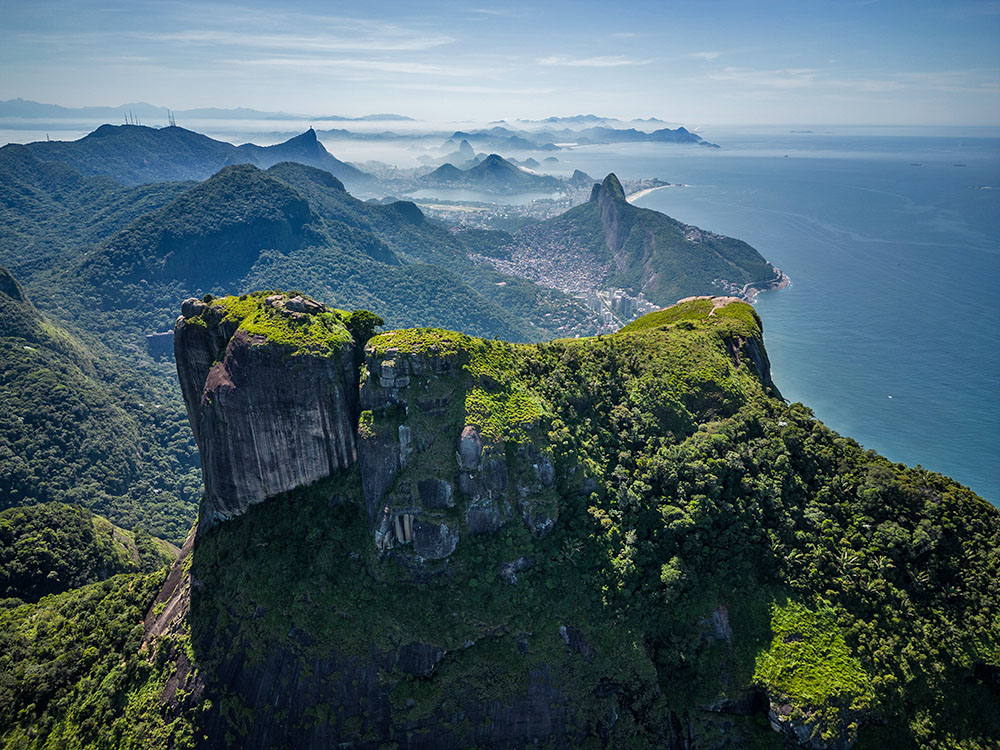
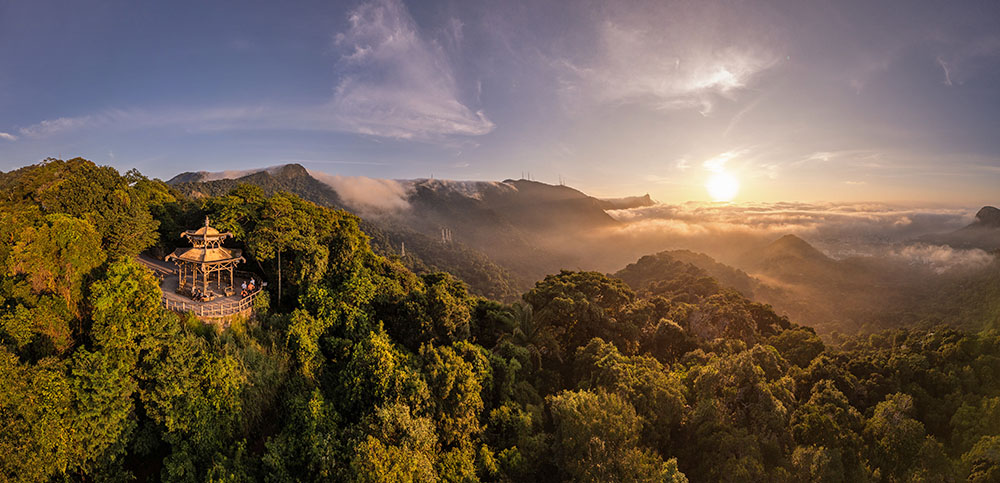
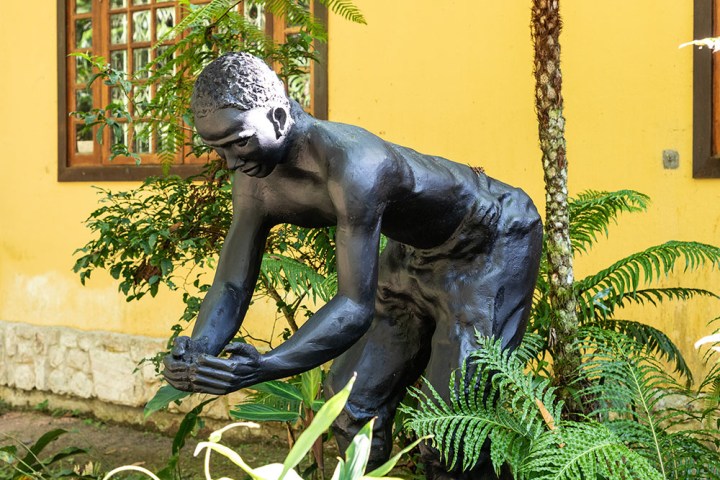
By the 19th century, what was once a fragment of the Atlantic Forest had become a patchwork of areas dedicated to timber extraction, sugarcane and coffee plantations. The deforestation caused a water shortage in Rio. Recognizing the severity of the issue, then-emperor Dom Pedro II initiated one of Brazil’s first restoration efforts, ordering the reforestation of the area. An army major named Archer led this initiative with a team of six enslaved workers, Eleutério, Constantino, Manuel, Matheus, Leopoldo and Maria, who planted 100,000 seedlings over the course of 13 years, transforming the area into a Protective Forest. But it was only in the 1960s that the Tijuca Forest became part of the Tijuca National Park, a conservation unit established by a decree from then-president Jânio Quadros.
One might look at the green hills of Tijuca National Park against Rio’s skyline and think of them as a complete ecosystem. However, there has been a key element missing from its interior: wildlife. Despite the efforts to restore the forest, many vertebrates could not return there on their own. Without them, ecological processes such as seed dispersal, crucial to the ecosystem’s maintenance in the long term, cannot occur, cementing the future of an empty forest.
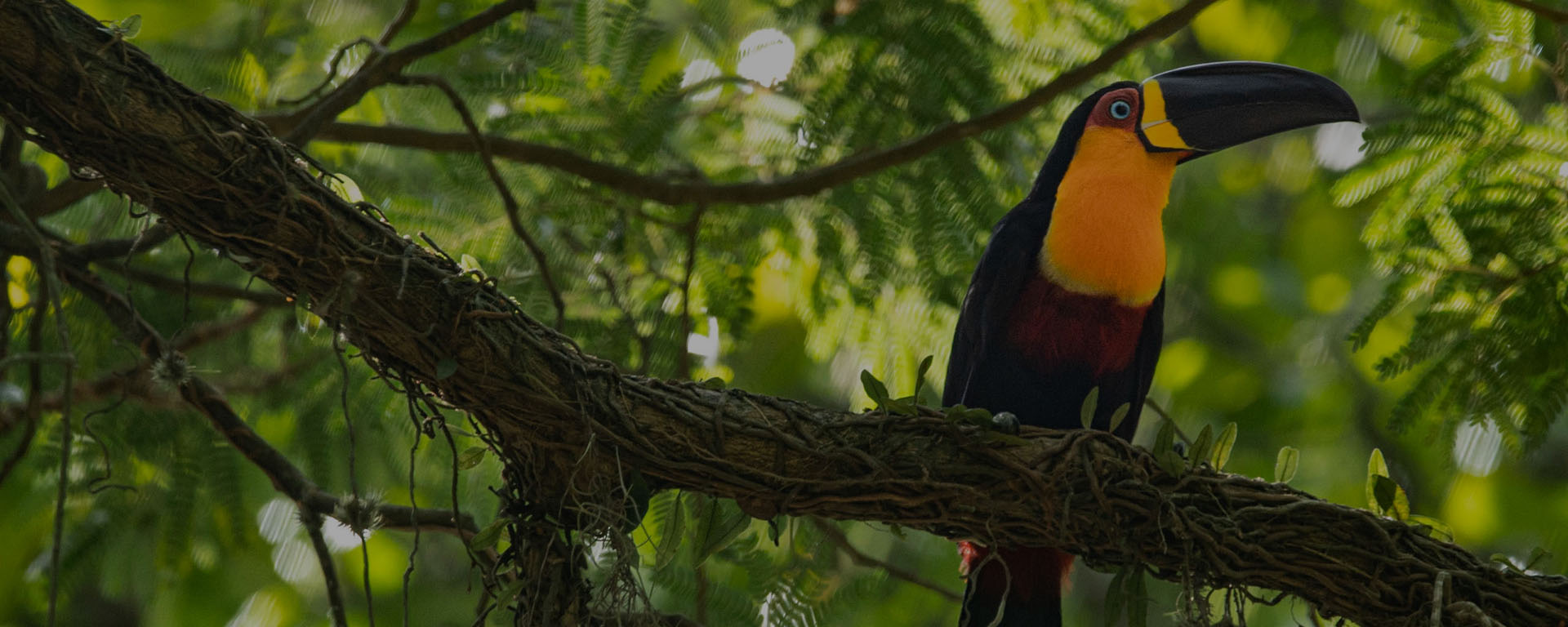
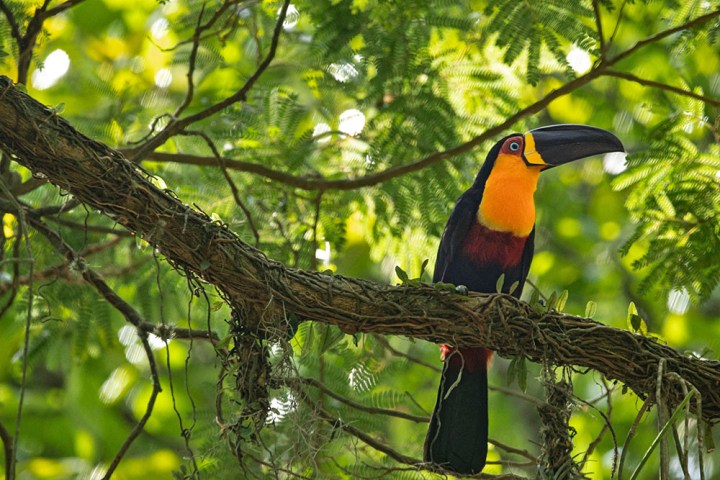
In the face of the scarcity of fauna in Tijuca National Park and the growing number of animals accumulating in ex situ facilities after being seized from the illegal wildlife trade, researchers Adelmar Coimbra-Filho and Antonio Aldrighi sought to address both issues simultaneously. In the late 1960s, they released representatives of over 30 vertebrate species in the forest, in work that included both population reinforcements and reintroductions. This was a pioneering initiative, and most species were not monitored after their release. Yet, some of the reintroductions resulted in successfully re-established populations, with the channel-billed toucan (Ramphastos vitellinus) standing out as a striking example.
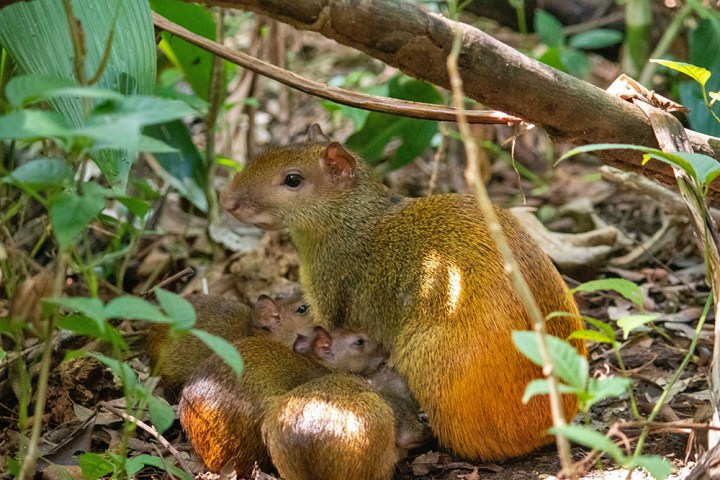
However, there were missing pieces in the forest’s puzzle. By 2010, Professor Alexandra Pires of the Federal Rural University of Rio de Janeiro and Ivandi Castor, Tijuca National Park’s environmental analyst, had noticed fruits of Joannesia princeps rotting on the forest floor. In Portuguese, this tree’s popular name is cutieira (“agouti tree”), a reference to the agouti, an avid consumer of the fruits. This rodent was still absent from the Park, while hundreds of them were concentrated in Campo de Santana, a small park in the center of Rio. A team of researchers from two Federal Universities decided to translocate individuals from Campo de Santana to Tijuca National Park. Following a soft-release protocol, agouti populations capable of dispersing cutieira seeds were re-established throughout the forest.
The initial success of the agouti reintroduction and the effective re-establishment of ecological interactions between rodents and trees sparked a greater ambition: to rewild Tijuca Forest with multiple animal reintroductions and properly monitor their outcomes. This marked the birth of Refauna, a refaunation initiative that combines conservation practice and science to bring life back to empty forests.
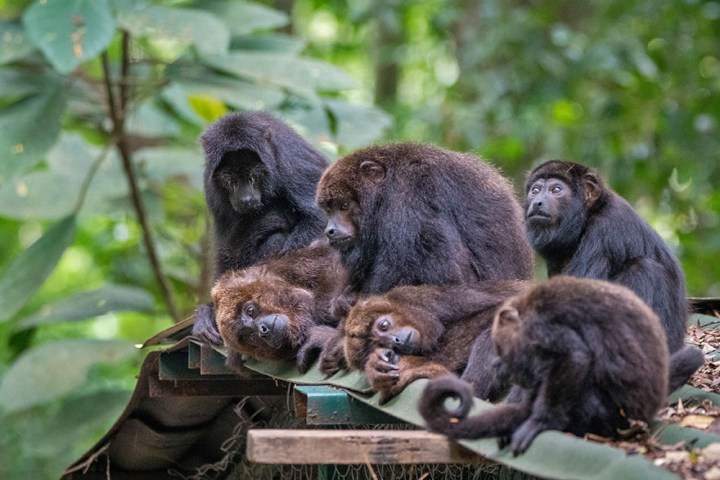
The brown howler monkey (Alouatta guariba) was the second species reintroduced to Tijuca National Park by Refauna. Its presence in the city of Rio de Janeiro was last recorded by Charles Darwin himself in 1832. In 2016, five howlers were released, but since most of them had behavioral issues that made their permanence in the forest impossible, only the female Kala remained. In 2017, she was joined by the male Juvenal, and they formed the Park’s first pair of howlers, producing at least one offspring annually.
That same year, a yellow fever outbreak devastated howler monkey populations across Brazil, changing the species’ conservation status from Least Concern to Vulnerable. Although Tijuca’s population was unaffected, new releases were suspended. In 2024, though, in partnership with Fiocruz and the Primatology Center of Rio de Janeiro, Refauna vaccinated six howlers against yellow fever and released them in the Park in a groundbreaking effort under the National Action Plan for howler monkey conservation.
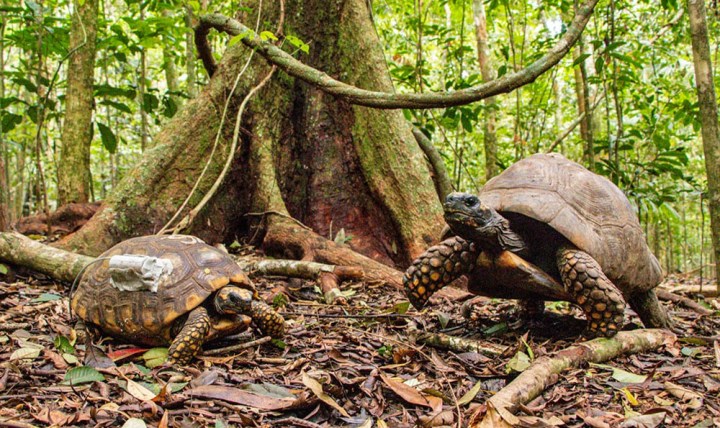
The next species in the reintroduction list was the yellow-footed tortoise (Chelonoidis denticulatus). Between 2020 and 2024, over 50 individuals were released in Tijuca National Park and monitored for at least one year via radio telemetry. While yearly survival rates were promising, there was no evidence of successful reproduction aside from some eggs being found and mating events recorded. Nevertheless, this species generated the most engagement from local communities and visitors to the Park. Currently, the population is monitored exclusively through citizen science.
Much has been accomplished in the centuries-long effort to restore the Tijuca Forest, but the journey is far from over. Refauna remains committed to rewilding Tijuca National Park, with the reintroduction of the blue-and-yellow macaw (Ara ararauna) as the next exciting milestone. As a newly established NGO, Refauna invites you to contribute whatever you can to ensure that, centuries from now, there is a thriving forest in Rio de Janeiro.
Location of Tijuca National Park
 Rewilding Successes