

You are welcome to republish this story through the Creative Commons license CC BY-NC-SA 4.0. Where republishing conditions differ for images, this is noted in individual captions. (See this page for more information.)
By Cyril Forchelet
Cyril is Project Manager for the Étang de Cousseau nature reserve.
Created in 1976 on the edge of the town of Lacanau, in Gironde, France, the Étang de Cousseau nature reserve covers 900 hectares. The reserve, which is managed by the environmental body SEPANSO Aquitaine, is located 50 km west of Bordeaux and 3 kilometers from the Atlantic Ocean. It leans against the eastern side of the coastal dune belt. The reserve is made up of three main environments: the Cousseau lake; some forested dunes, scattered with wetlands that, locally, are called barins; and a mosaic of heathland and marshes. Visitor access is subject to strict regulations.
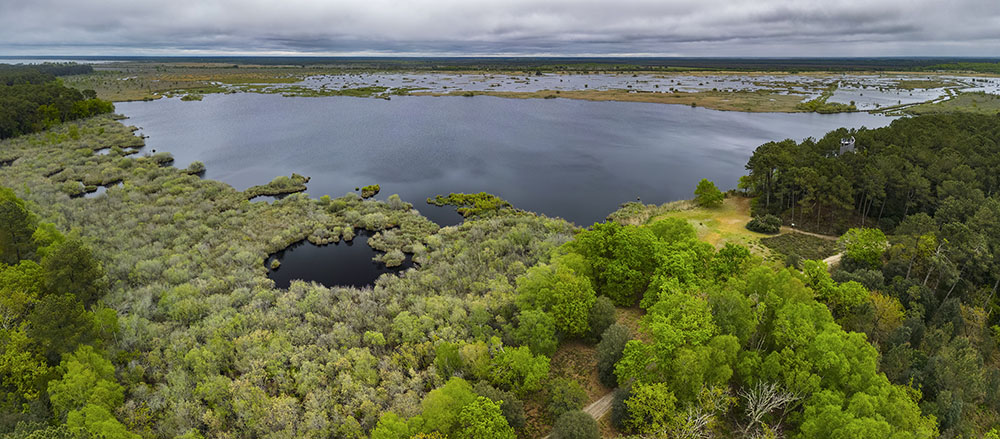
In addition to the remarkable aesthetic and landscape aspect, which leaves a strong impression of wildness, the essential interest of the nature reserve lies in the fact that, within a relatively small surface area, there is great biodiversity. The reserve is home to rare plants such as the mat-forming perennial Caropsis verticillato-inundata. The site avifauna is very rich: several thousand common cranes spend the winter on the reserve, while, in summer, many species, including the Eurasian curlew and the common snipe, breed there. The reserve is also home to a great diversity of terrestrial fauna, including otters, deer, badgers, and many rare insects.
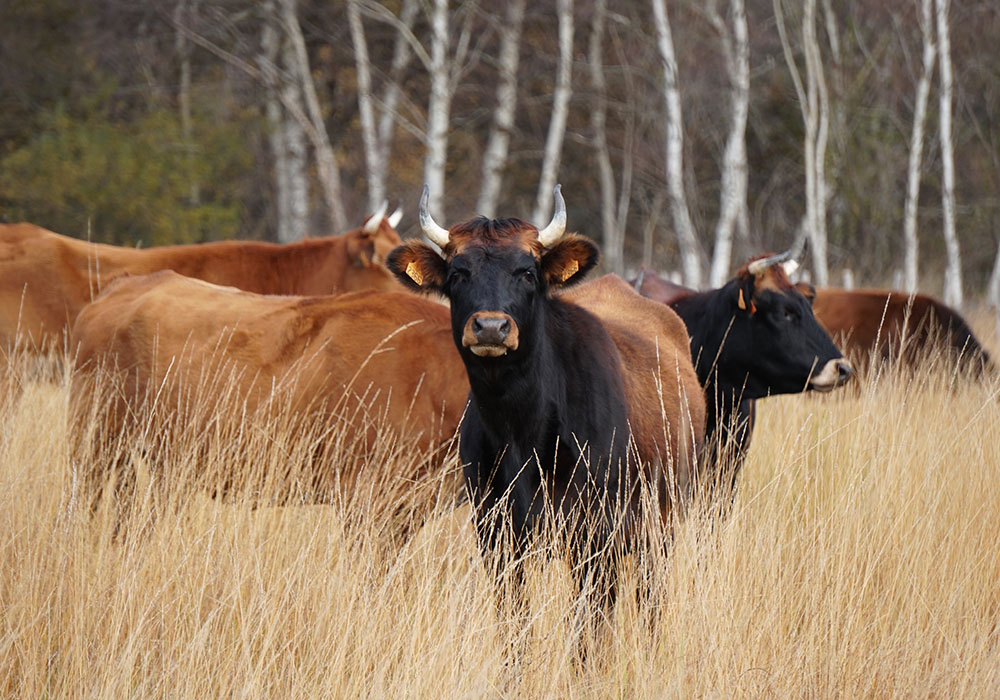
Since 1990, the nature reserve has been grazed by an ancient breed of cattle: the Marine-Landaise cow. Marine-Landaise cows historically lived in the wild along the coast of Gironde and the Landes. They freely roamed the dunes in winter, and then the marsh and heath in the summer. Back in the 19th century, at a time when the dunes were being ‘fixed’ through the creation of pine plantations, these animals began to be actively hunted down. The ancient breed came close to extinction in the post-war years. Fortunately, though, it was possible to purchase the last known herd in 1988 and offer them refuge on the nature reserve, where they have benefitted from a long-term conservation program. It is a program that has not just saved the breed but contributed to the restoration of the heaths and the marshland, bringing with it numerous returning species.
When the cows returned to the nature reserve, the dung beetles found there were limited in diversity and number, and this greatly hampered the dung decomposition processes. However, since that time these coprophagous insects have been gradually diversifying and increasing. The cows are not subject to any preventative antiparasitic treatment, a move that has played an important role in supporting the re-establishment of dung beetles. As of 2022, a total of 29 species had been identified, including some rare taxa for France. However, some historically present beetles that disappeared from the site had not yet reappeared, with the remaining absentees including the species Scarabaeus laticollis.
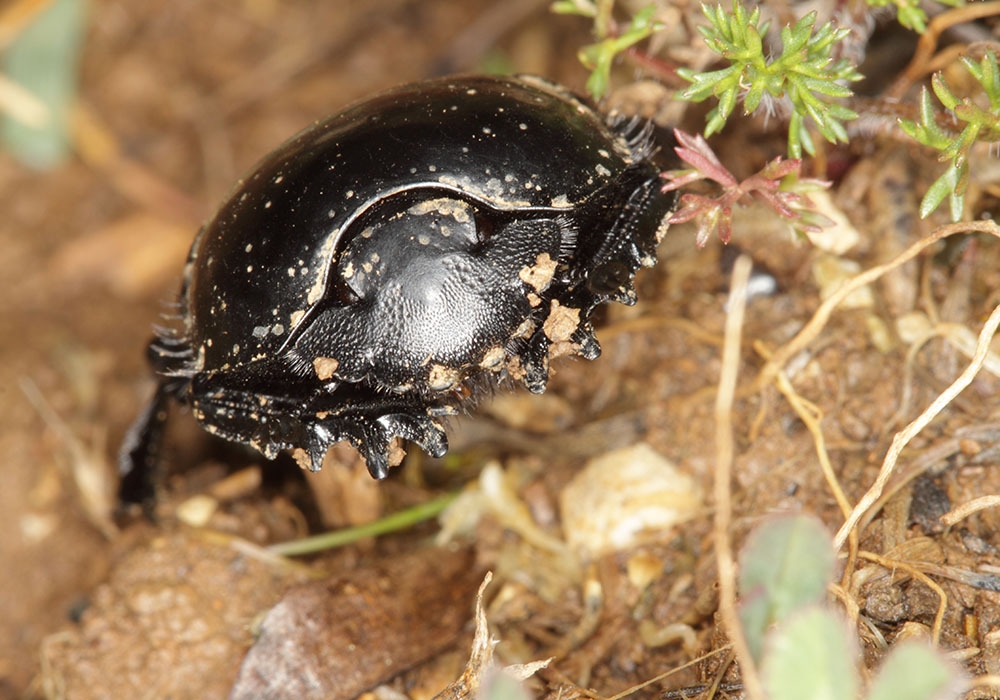
Thanks to the technical and scientific support of Jean-Pierre Lumaret, around sixty Scarabaeus laticollis individuals were collected in the spring of 2023 in the Montpellier region, where the beetle is still abundant. The individuals were directly transported to the Cousseau reserve after their capture. Based on a careful analysis of the ecology of the species, the chosen reintroduction zone was a sandy clearing in the forested area. This type of environment is similar to that frequented by the species elsewhere in southern France. Before being released, individuals were color-marked, allowing their monitoring with the mark–recapture method.
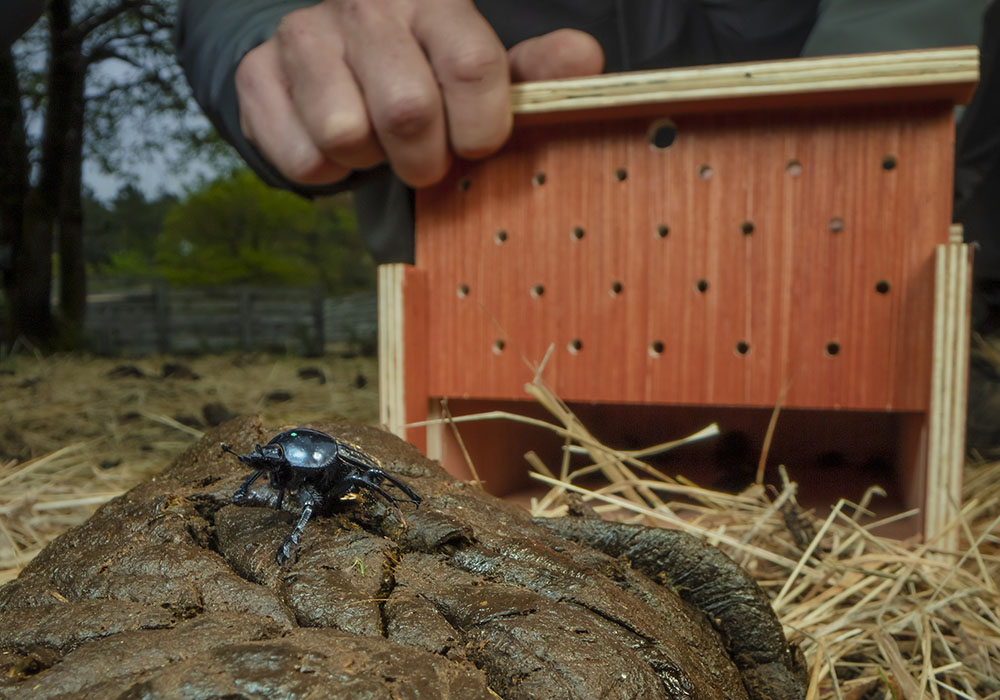
The first monitoring carried out in spring 2023 was encouraging. In the weeks following the reintroduction, several individuals were observed rolling and burying dung balls in the reintroduction zone.
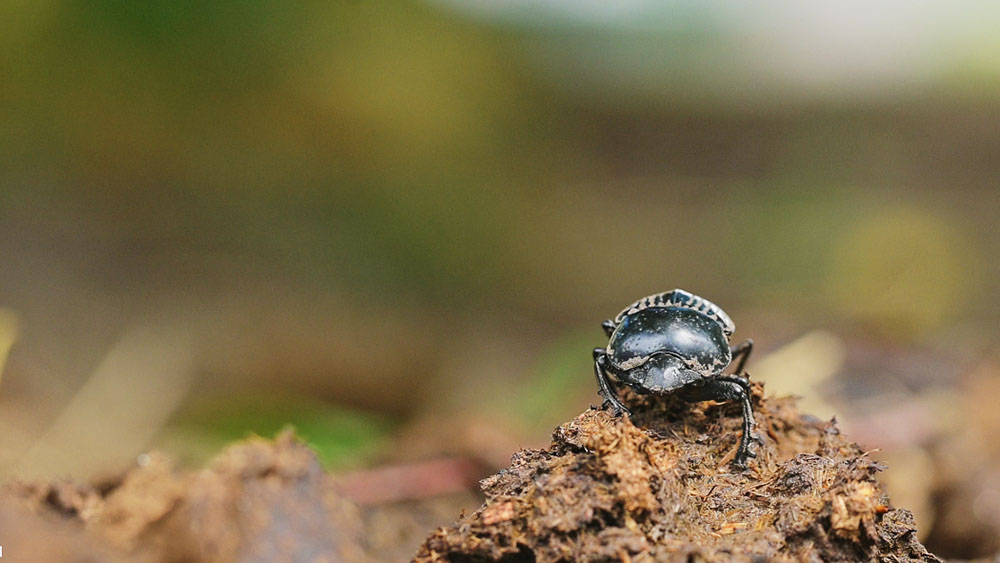
In 2024, the dung beetle reintroduction operation has been continued, and the naturalistic grazing regime has been diversified through the introduction of water buffalo.
 Rewilding Successes