

You are welcome to republish this story through the Creative Commons license CC BY-NC-SA 4.0. Where republishing conditions differ for images, this is noted in individual captions. (See this page for more information.)
By Claudia Bell
Claudia is Conservation Project Officer for Saving Wildcats.
This story was published on the occasion of Earth Day 2024.
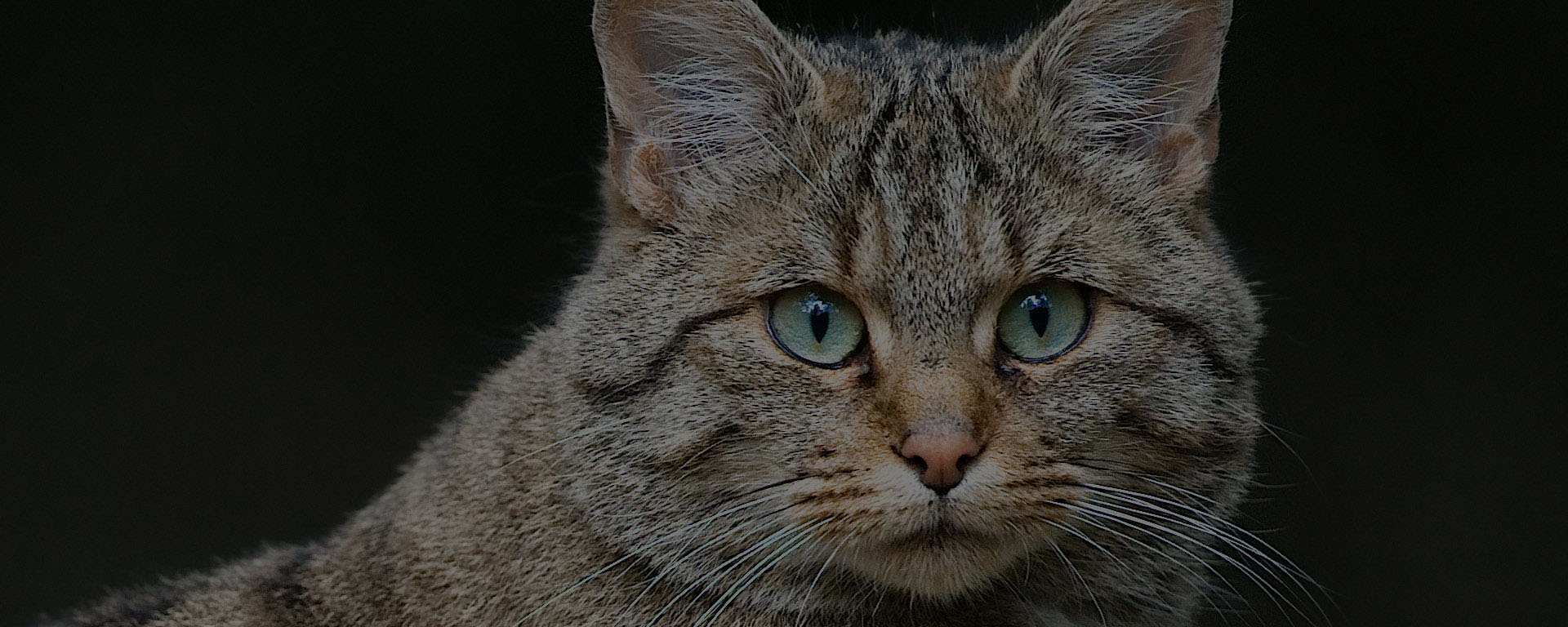
Within the Cairngorms National Park in the Scottish Highlands, 19 European wildcats have recently been released through a conservation project known as Saving Wildcats. This is part of efforts to bring the species back from the brink of extinction in Scotland.

In 2019, the International Union for Conservation of Nature concluded that the wildcat population in Scotland was ‘non-viable’, meaning that there are too few wildcats for it to be self-sustaining. Following widespread population declines caused by centuries of persecution and habitat loss, the dwindling wildcat population has more recently become threatened by genetic extinction through extensive interbreeding (also known as hybridization) with domestic cats. Therefore, the few individuals that may be left have little to no chance of surviving without the release of individuals from a conservation breeding program.
Led by the Royal Zoological Society of Scotland, Saving Wildcats is a six-year European partnership project dedicated to wildcat conservation and recovery. We aim to prevent the extinction of wildcats in Scotland by breeding and releasing these animals into the wild landscapes of Scotland. We are the first project in the UK that has developed a dedicated conservation-breeding-for-release program for a felid species. This is also the first example of a successful translocation of a mid-sized carnivore in the UK.
At the start of the summer in 2023, we began releasing wildcats into the Cairngorms Connect landscape, and now 17 of the 19 released wildcats call this landscape and nearby habitats home. From the data gathered through GPS radio collars, we can not only see their most recent movements but also learn if they interact with each other, which is especially important over the breeding season. Of the two wildcats not in the area, one has died of an abdominal infection and one has crossed the Cairngorms plateau, venturing towards the National Trust for Scotland’s Mar Lodge estate.

With 18 wildcats having survived the winter just gone, there has been a much higher survival rate than was expected for carnivore translocations, and we are now starting to re-collar the wildcats (putting on collars with fresh batteries). We are hoping to gather a complete year’s worth of data, giving us insights into their movements and behaviors, including over critical periods such as the breeding and birthing season.
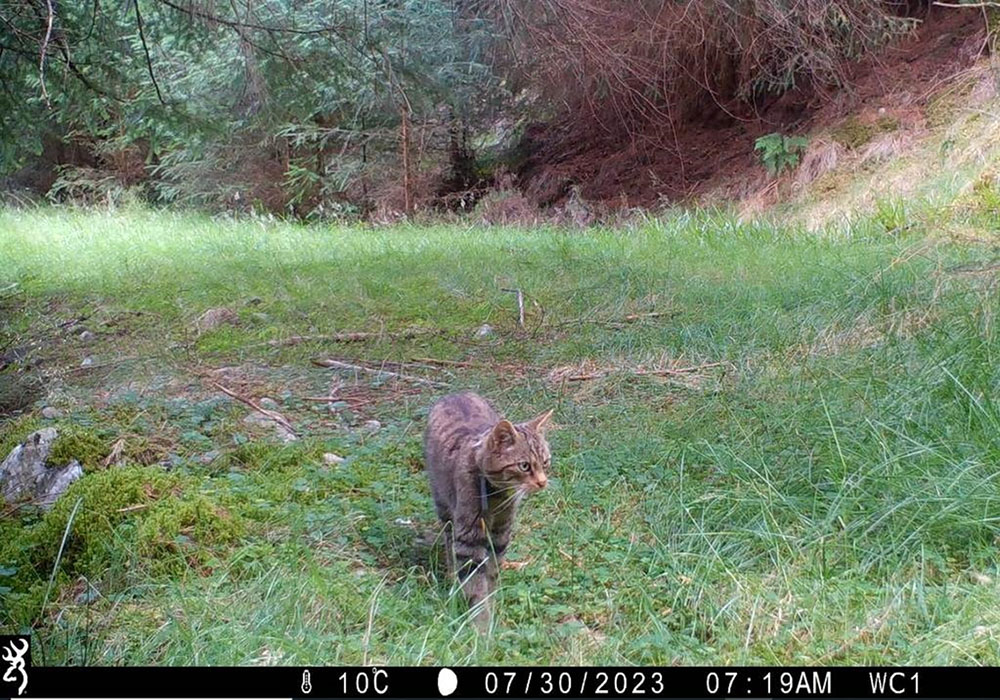
Wildcats face several threats, and our released individuals are no exception. Hybridization (breeding between domestic cats and wildcats producing fertile offspring) is a phenomenon that is seen across the whole of Europe, not only within the subpopulation of Scotland’s wildcats. As a team, we undertake a Trap–Neuter–Vaccinate–Return method to mitigate the risk of feral domestic cat populations hybridizing with the released wildcat population.
Our in-situ conservation team is also working closely with land managers, including farmers and gamekeepers, to find ways to work together for a positive future for wildcats. Additionally, we have hosted several community events, online talks, and workshops, and we have attended various country fairs. This ensures that we have a strong presence in the community and helps us to understand how people can benefit from the presence of wildcats. It allows us to mitigate concerns and provide updates on released wildcats and plans for the future, as we strive to save Scotland’s wildcats.
The work that the in-situ conservation team carry out is only one half of the puzzle. At Highland Wildlife Park, in our conservation-breeding-for-release center (away from the area that visitors can access), our ex-situ animal management team are in the midst of the breeding season with eight breeding pairs. We are hoping for a successful breeding season this year, following the birth of 22 wildcats in the project’s first season and 14 in the project’s second.

Using our CCTV system of over 100 cameras, we can provide a hands-off approach to animal husbandry. In our breeding enclosures, we use the cameras to see if the pairs have been mating and monitor the interactions with the keepers to ensure that the wildcats aren’t becoming habituated to human presence. In our pre-release enclosures (which are large open-topped enclosures used to prepare the wildcat kittens for releases into the wider landscape), we use the cameras to monitor wildcat interactions with each other and our keepers, as well as analyzing their behavior to ensure they have the necessary skills to survive a challenging life in the wild.
The first releases of wildcats constituted a historic moment for the project and the amalgamation of decades of research and practical work. The survival and breeding of these wildcats is critical to bringing the species back from the brink. For more information visit savingwildcats.org.uk.
 Rewilding Successes